
Value and Climate:
Increasing Stranded Asset Risk
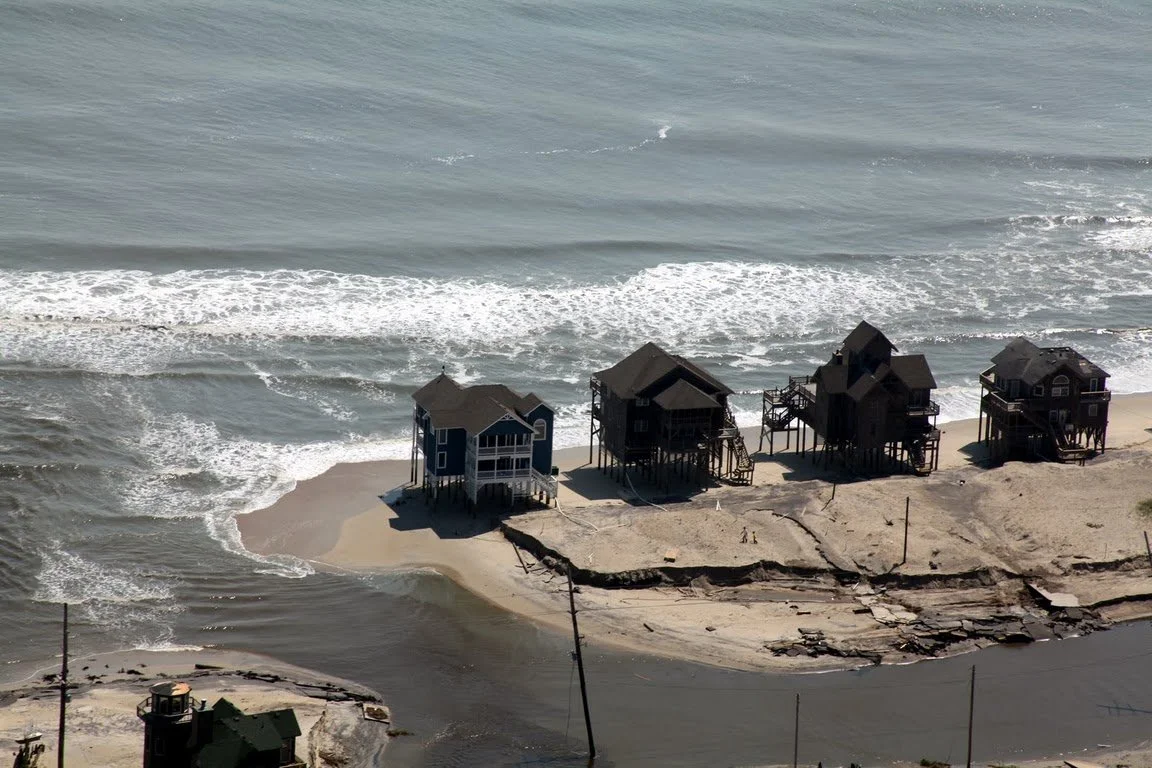
Homes in Pea Island NWR, North Carolina stranded by Hurricane Irene, 2011. Credit: Tom MacKenzie, USFWS
“Rule number one: don’t lose money. Rule number two: never forget rule number one.” - Warren Buffet
Stranded asset risk due to climate change is an increasing tail risk for real estate investors. Avoiding stranded asset risk is a cornerstone of investing in illiquid assets, where stop-loss orders are tricky to implement.
How assets become stranded:
Consumer sentiment shifts towards new products. Example: As MP3’s made CD’s obsolete, and the equipment used to manufacture CD’s became obsolete.
The economy enters a recession, pushing asset values down relative to their cost. Example: During a recession, demand can fall off steeply due to income shocks - consumers stop buying new cars, and the car factories suddenly have a much smaller market for their product.
Legislation or liability makes the asset obsolete. Example: asbestos mines became useless when asbestos was banned as a commercial product. In this case, the asbestos mines actually shifted from being assets with no value to being liabilities due to their cost of cleanup. Similarly, product lines can become liabilities when they are discovered to be carcinogenic.
Global events such as natural disasters or wars could literally “strand” the asset in an unreachable location. The cost of retrieving it could come close to, or even outweigh, any profit the business could make from it.
In the context of climate change, there are several ways that real assets can become stranded:
Sea level rise makes the asset unusable, either because it physically inundates the property, or because the cost of holding back the sea is uneconomical.
Sea level rise inundates neighborhood infrastructure such that the neighborhood is unviable or uneconomical for continued use.
The combination of rising seas and increased hurricane risk make the asset uninsurable. Alternatively, the cost of insurance becomes uneconomic.
Fire risk can strand assets as well, notably properties in hills experiencing increasing wildfire risks, including California, Colorado, British Columbia. See examples, Pacific Palisades, Orinda, Oakland/Berkeley Hills
Severe Convective Storms are an increasing risk.
Drought conditions can severely affect agriculture, communities’ drinking water availability, and even affect the availability and pricing of hydroelectric power facilities, making business dependent on stable electrical costs obsolete.
The big investing question is when and how far will prices adjust?
The corollary to avoiding investment in stranded assets is finding long term assets that are likely to experience a net benefit from climate change.
Is your property in a neighborhood with lots of stranded assets? Is your property subject to “managed retreat?”
Insights
-
Related Insight #1
Description - Related Insight #1
-
Related Insight #2
Description - Related Insight #2
-
Related Insight #3
Description - Related Insight #3